Life can get busy, and wearing your retainers may not always be at the top of your mind. You’ll get no judgment about it at Delplanche Orthodontics. Having said that, we have some bad news. Even short lapses in your retainer routine can lead to changes in your smile’s alignment. If your teeth have shifted, it’s understandable to feel disappointed after all the effort you put into your orthodontic care. The good news is that we can stop these runaway teeth in their tracks. Keep reading to find out how.
Why Do Teeth Shift After Orthodontic Treatment?
After finishing orthodontic treatment, it’s common to notice some minor teeth shifting. Teeth are held in place by ligaments and tissues that naturally have a bit of elasticity. Even after braces are removed or clear aligner treatment is finished, these tissues still remember their old positions. They will slowly try to move the teeth back to where they started. This is why you risk your smile becoming misaligned again if you don’t wear your retainer.
Note: Let’s say you wear your retainer religiously but still notice that your upper and lower teeth don’t align as perfectly as they used to. You’re not going crazy! As we age, natural changes in our jawbone and facial structure can cause teeth to shift slightly. This is normal. It doesn’t mean you need retreatment. As long as it doesn’t bother you or create health issues, you probably don’t need to make an appointment for another orthodontic consultation.

How Far Will Your Teeth Actually Move?
This is the question most people are really asking, and the honest answer is that it depends on how long the retainer has been sitting in a drawer and how your teeth moved in the first place.
Movement can start within weeks. The first year after braces come off is when your teeth are least stable, because the ligaments holding them have not fully settled into their new positions yet. Skipping retainer wear during that window causes more movement, faster, than the same lapse would five years later.
The lower front teeth almost always go first. They tend to crowd and rotate before anything else, which is why a lot of people notice the change there before they notice it anywhere else in their mouth.
What usually does not happen is a complete return to where you started. Most relapse is partial, which is genuinely good news, because it means the correction needed is smaller than the original treatment. If you want the full picture on prevention, it is worth understanding how retainers work and why the wear schedule changes over time.
How Can You Fix It?
You can get touch-up treatment! It’s a way to correct minor shifts that occur after your initial orthodontic treatment. Think of it as a smaller, more focused version of your original braces or aligner journey, designed to address small movements in your teeth that might have happened because you stopped wearing your retainer or due to natural changes as you age.
Touch-up treatment is different than starting from scratch. It’s typically shorter in duration and concentrates only on those areas where movement has occurred rather than realigning your entire smile.
What touch-up treatment looks like exactly varies from person to person, depending on the severity of the shifting. When you come in for a touch-up consultation, we’ll create a personalized treatment plan based on your needs and the concerns you’d like addressed, even if we didn’t do your first round of treatment. So, if you’ve moved away from your childhood practice, your previous orthodontist retired, or you just want to try a new office, we’re here to help.
Signs You Might Need a Touch-Up Treatment
You could seek touch-up treatment if you simply don’t love the way your smile looks anymore due to minor shifts. It’s an easy way to restore your confidence and feel less self-conscious about grinning, laughing, and talking.
However, touch-up treatment isn’t always about loving what you see in the mirror. Just like first-time orthodontic patients, touch-up treatment is sometimes needed to stay healthy and comfortable.
- Tight or ill-fitting retainer: If your retainer doesn’t slide in like it used to or feels uncomfortably tight, it’s a strong sign that your teeth have moved out of alignment. You should consult an orthodontist. At the very least, you likely need a new retainer.
- Visible shifting: Small gaps, crowding, or crooked teeth that weren’t there before are clear indicators of unwanted movement. This includes if your upper and lower teeth no longer align correctly when you bite down or clench your teeth.
- Difficulty chewing: If you find it harder to chew food properly, shifting teeth might be to blame.
- Jaw pain or discomfort: Shifts in tooth alignment can stress your jaw’s temporomandibular joint (TMJ). If you’re experiencing TMD symptoms, you might need touch-up treatment.
- Difficulty keeping up with oral hygiene: Misaligned teeth can make brushing and flossing effectively more challenging, increasing your risk for plaque buildup, cavities, and gum disease. If you struggle to maintain good oral hygiene, your teeth might have shifted to create hard-to-reach areas.
Treatment Options at Delplanche Orthodontics
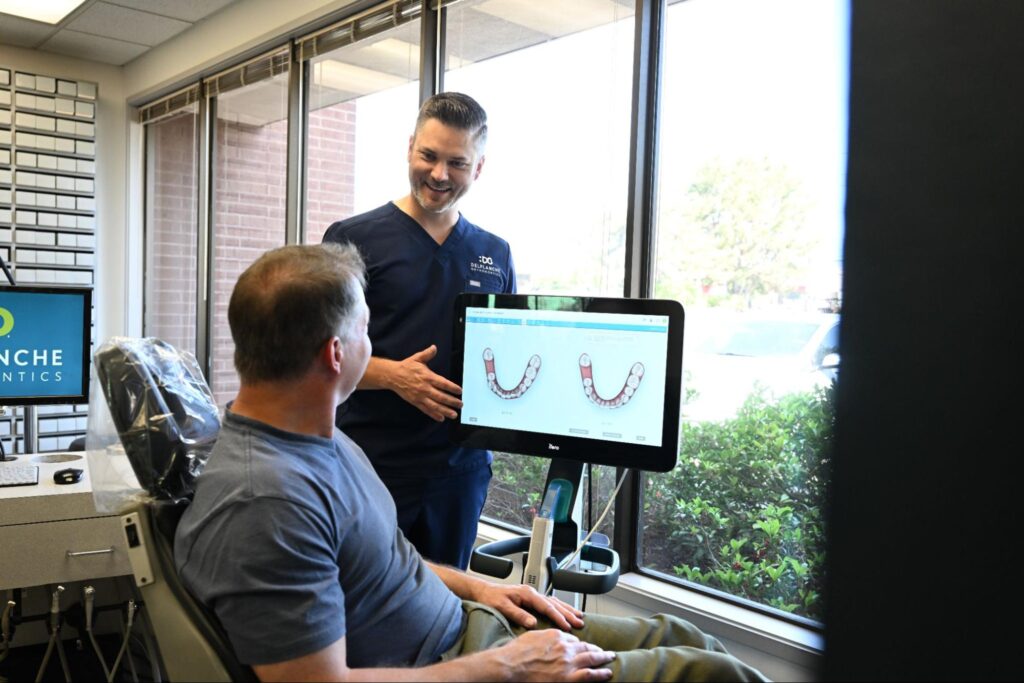
No matter what your smile needs, Dr. Delplanche has you covered. We can create the alignment you want with little to no disruption to your lifestyle using one of our three effective, comfortable, and customizable treatment methods.
- Clear aligners: For those who prefer a nearly invisible solution, clear aligners like Invisalign can be a great choice. These transparent trays are custom-made to fit your teeth for discreet and efficient teeth movement. They’re perfect for minor adjustments, which is what makes them so well suited to touch-up treatment. Plenty of people choose them ahead of a wedding or a graduation for exactly that reason.
- Traditional metal braces: While often associated with initial orthodontic treatment, metal braces in adulthood are still highly effective for touch-ups. They can address more significant shifts with precision, making them a good option if your teeth have moved more than just a little.
- Clear braces: Need the strength of metal braces but wish you could have the subtlety of clear aligners? Clear braces are the best of both. They use tooth-colored brackets that blend in with your smile while offering the same level of control as metal braces. They’re ideal for those who might lose their aligners, or who need the power of braces but aren’t a fan of the silver look.
FAQs About Teeth Moving After Treatment
Can I wear my old retainer to realign my teeth?
If your teeth have shifted, wearing an old retainer might do more harm than good. As well as being too tight or uncomfortable, it could potentially cause serious damage to your teeth or gums. Bring it in and let us look at it before you force it back on.
Will touch-up treatment take as long as my original treatment?
No. Touch-up treatments are typically shorter than the average initial orthodontic process. Since they focus on minor adjustments, many patients finish in just a few months. Still, we would encourage you to stay flexible during your consultation, just in case yours needs longer.
Is it too late if my teeth shifted years ago?
No. Teeth respond to orthodontic treatment at any age, so a shift you have lived with for a decade is just as correctable as one you noticed last month. It may take a little longer, since older movement has usually gone further, but the door has not closed.
Will I need to wear a retainer again after touch-up treatment?
Yes. A retainer is essential to keep your teeth from shifting, and wearing it as instructed is what maintains your results long term. There are several types of retainers, and if compliance was the problem the first time around, a fixed option may suit you better.
Ready to Get Your Smile Back?
Don’t wait to take action if you’ve noticed some shifting in your smile. Stop the regression before it warrants a second full orthodontic experience.
Visit Delplanche Orthodontics in Beaverton, OR, or Lake Oswego, OR, and regain your beautiful, straight smile with tailored touch-up treatments. Schedule your consultation and get your smile back on track.